
Which part of the bridge should the inspector look at?
- Data
- Street-level imagery and 3D scans of bridges of different sizes and ages.
- Built
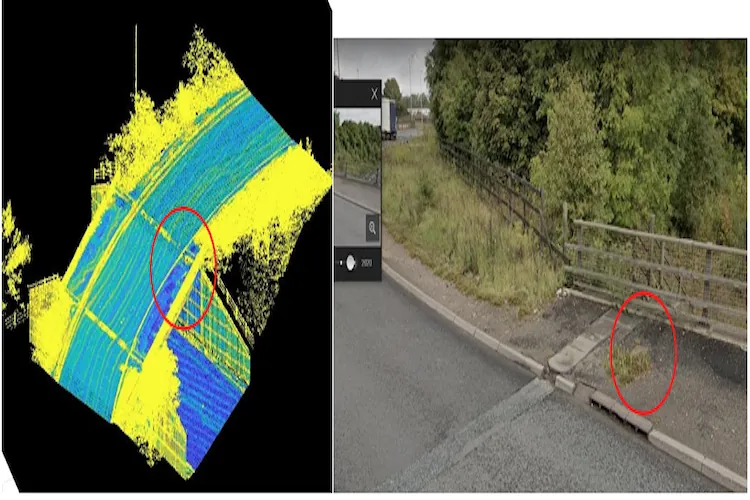
- Detection of irregularities in shape and colour across the structure, pointing inspectors to the areas worth a close look.
- Result
- Data from many bridges filtered down to the few with issues.
The question
Bridges are hard to monitor: they vary in size and age, carry heavy traffic, and often sit over terrain that is difficult to reach. Recording the whole structure in detail on every visit is rarely feasible, so the question is where to spend the inspector's time.
What we did
We built algorithms that scan the available imagery and 3D data for irregularities in shape or colour, and mark them on the structure. Inspectors start from a short list of locations instead of the whole bridge, and preventive maintenance can be planned earlier.
What it changed
Data from many bridges is filtered down to the few with issues, so inspection time goes where it is needed.